What is A1c?
A1c (sometimes called HbA1c) is a measure of glycated haemoglobin A1c. Glycated haemoglobin is where glucose joins with haemoglobin, becoming glycated. Haemoglobin is a protein found in red blood cells that carries oxygen around the body.
Why is an A1c test useful?
Those with diabetes will benefit from an A1c test as it measures the HbA1c levels in your blood. Monitoring HbA1c levels provides a good overview of blood glucose (blood sugar levels) over three months.
As people with diabetes need to control their blood glucose levels, knowing your HbA1c levels can be essential for managing diabetes. If blood glucose levels become too high, people with diabetes can take appropriate action to reduce HbA1c levels to a healthy range.
Reducing HbA1c levels can reduce the risk of developing certain diabetes-related complications, such as cardiac disease or kidney failure. An A1c test reading can also be used in general health checks to direct someone to appropriate medical advice.
How does A1c relate to glucose?
An A1c test measures glycated haemoglobin levels, where glucose has bonded with haemoglobin in the bloodstream. Taking an A1c now test provides a picture of your average blood glucose levels over the last three months. The result is given as a percentage, with high blood glucose levels resulting in a higher percentage.
What role does A1c play in diabetes standard of care?
It is recommended that someone with diabetes should monitor their average blood glucose levels. Properly monitoring blood sugar levels is the best way to manage diabetes and ensure you are achieving glucose targets.
How does A1c relate to diabetes complications?
Research has found that those with type 2 diabetes can reduce the risk of complications by lowering their A1c levels. It was found that for each 1% reduction in A1c levels, there was a 37% decrease in microvascular complications and a 21% reduction in diabetes-related complications or death. Research findings are taken from the UK Prospective Diabetes Study.
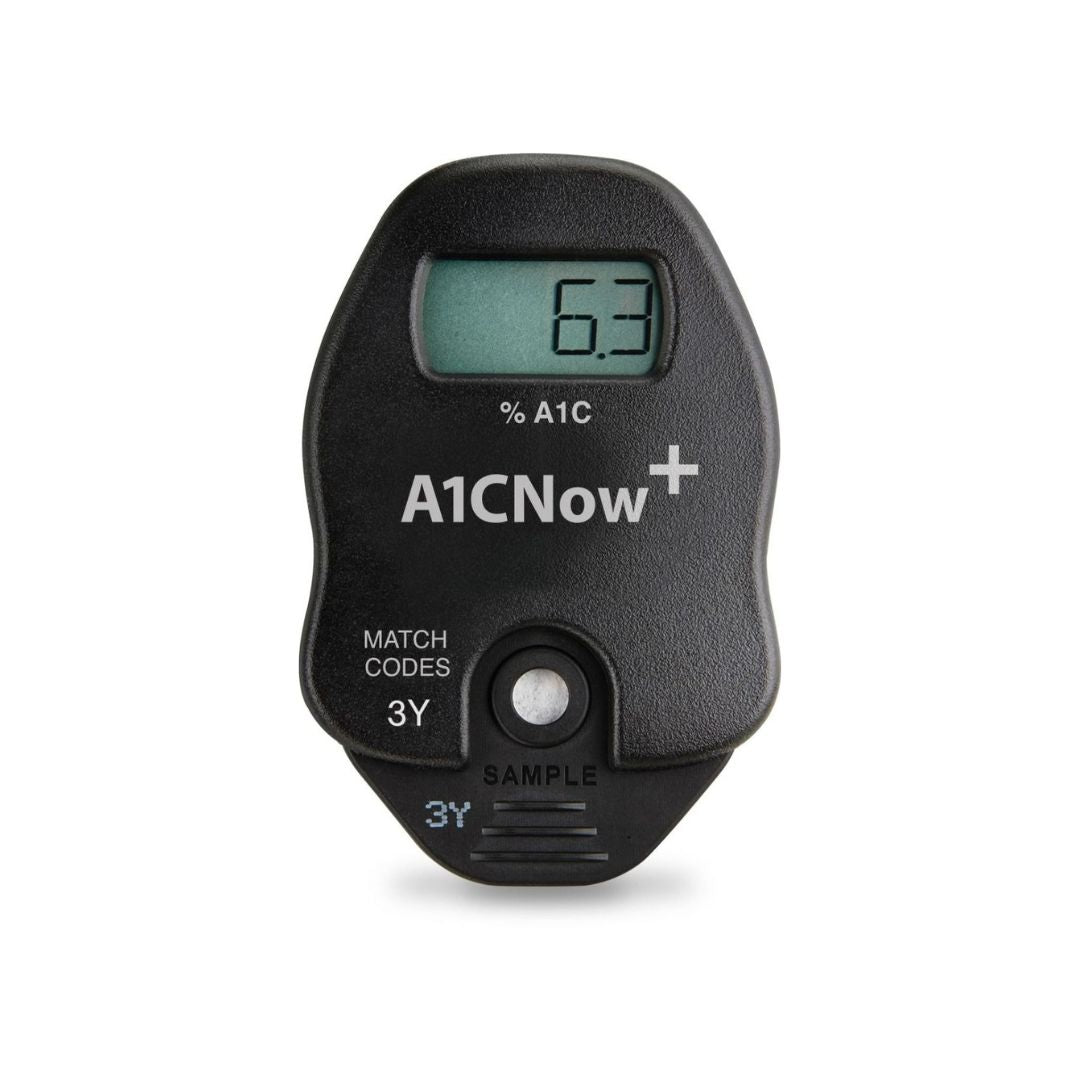
How does the A1cNow Self-Check system work?
The A1cNow Self-Check system uses a system of chemical reactions that determine A1c levels in your blood.
Can I purchase more cartridges?
No, each analyser is only programmed for four tests. Once the four tests have been used, the device will fail to read any additional test cartridges. The 4 test cartridges are provided with the meter inside the box.
It is recommended by the American Diabetes Association (ADA) that people with diabetes struggling to meet glycemic targets or control blood glucose levels should only test their A1c four times a year. This also includes those who treatment plan has changed.
By conducting A1c self-check tests, patients can continue to consult with a healthcare provider on meeting glycemic goals more frequently without quarterly office visits. This allows patients to make timely treatment changes to reduce the risk of diabetes complications.
Appropriate disposal of the analyser should be made once the device has no remaining tests.
Does it hurt?
No, while a small finger prick is required to collect a small 5 µl blood sample, the testing process does not hurt. To collect the blood sample using the sample collector, a small finger prick is made using the provided lancet, which feels like a sharp scratch.
Do I need much equipment?
No, everything you need to carry out the test is provided inside the box. You do not need to acquire any additional equipment.
What are the side effects?
The test requires only a small 5 µl fingerstick blood sample and is carried out externally, so there are no side effects. Some people may find the small finger prick necessary for a blood sample uncomfortable.
How accurate is the A1cNow Self-Check?
The A1cNow Self-Check device provides a near-accurate A1c result, with only a slight difference from -11 to +9 mmol/mol from professional A1c tests. For example, a professional A1c test with a true A1c of 53 mmol/mol may read between 42 and 62 mmol/mol.
The device is certified by the National Glycohemoglobin Standardisation Program (NGSP), which develops the standards for A1c testing. Also, the results are comparable to the Diabetes Control and Complications Trial (DCCT).
However, compared to the test carried out by a medical professional or laboratory, it is unlikely that A1c results will match. Such professional tests use different technologies and testing methods compared to the A1cNow Self-Check device for determining A1c levels.
You should always discuss conducting self-tests with your healthcare professional beforehand or if you find the results significantly differ from a professional laboratory test.
Never make any lifestyle or diet changes based on self-test results before consulting with your GP. The A1cNow Self-Check test is not a replacement for regular blood glucose monitoring as part of a diabetes treatment plan.
Why should I use it if it is not as accurate as laboratory tests?
Even though self-test results are less accurate than laboratory tests, the A1cNow Self-Check test provides a simple and easy way to check and monitor A1c levels over an extended period. Monitoring A1c levels helps you to manage diabetes for a better quality of life.
You should not use the self-check test to screen or diagnose diabetes. For diabetes screening or diagnoses, you should see a trained medical professional. Instead, the test is for those with diabetes under a treatment plan to easily monitor A1c levels at home.
From conducting the test, you can seek medical advice when necessary or determine the effects of any lifestyle choices discussed with a medical professional. The test can be carried out anywhere and anytime without fasting, with results ready in 5 minutes.
The A1cNow Self-Check is certified by the National Glycohemoglobin Standardisation Program (NGSP), with accuracy tests conducted to ensure the device adheres to the strict requirements of the NGSP.
What does the result mean?
An A1c test measures the amount of glycated haemoglobin so those with diabetes can monitor their average blood glucose levels over the last three months. The device measures the ratio of glycated haemoglobin to haemoglobin, presenting the reading in mmol/mol.
The unit measurement for monitoring A1c levels is set by the International Federation of Clinical Chemistry (IFCC) to ensure coherent reporting of results worldwide. The test may provide a reading as a percentage (%, DCCT unit).
The higher the percentage DCCT value, the higher your blood glucose levels. Normal A1c levels are less than 5.7%. If you need clarification on DCCT values, a table inside the operating manual lists the IFCC value and the DCCT equivalent percentage.
You should always discuss the self-test results with your medical professional, as the result will depend on your A1c target and objectives.
Can the test give me a false reading?
Yes, the test has been known to give a false reading for some people with a condition affecting their blood or haemoglobin. Those with anaemia, pregnant, experiencing heavy bleeding, kidney disease, or liver disease can obtain false readings.
In some cases, those with a particular haemoglobin variant can also experience a false reading. If you have a bleeding disorder or undergoing anti-coagulant therapy, do not start using the A1cNow Self-Check before consulting with your medical professional.
I read some negative reviews and wonder if this product is good
The A1cNow Self-Check is manufactured by PTS Diagnostics, renowned for its innovative and accurate technology. The device is also NGSP certified, IFCC traceable, CE marked, and CLIA waived for greater test accuracy and safety.
How often should I test my HbA1c levels?
The American Diabetes Associates (ADA) recommends that A1c levels be tested only four times yearly. However, how often you test HbA1c levels will depend on your objective(s) or recommendations by your healthcare professional.
Red blood cells have a lifespan of approximately 12 weeks, so that the test can be implemented into your routine health checks. You can also use the self-check test to determine whether any approved lifestyle changes by a medical professional are working.
The test is not a replacement for blood glucose monitoring and should not be used for diagnosing or screening diabetes. We strongly recommend that you discuss the use of the self-test and the results with your medical professional, following any advice they give you.
Who is the test not suitable for?
The check is well suited for diabetes patients wanting a quick and easy way to monitor A1c levels. It is also recommended for diabetes patients whose doctors recommend they check their A1c levels.
However, the test is unsuitable for pregnant women, young adults, or children. Also, if you experience any of the following conditions, you should not use the self-check test before consulting with a medical professional:
different haemoglobin variants
bleeding disorder(s)
conditions that affect the blood or haemoglobin, such as anaemia
heavy bleeding
kidney disease
liver disease